
In summary:
- Treat international expansion as a series of solvable logistical puzzles, not an insurmountable strategic challenge.
- Focus on five key levers: product localization, frictionless payments, tiered shipping, proactive customs management, and strategic timing.
- Mastering data—from customer payment preferences to product HS codes—is the secret to scaling globally without a large team.
- Prioritize customer experience at the border by using DDP shipping to eliminate surprise fees and package refusals.
For many small business owners, the idea of selling internationally feels like a distant dream, blocked by a wall of intimidating questions. How do you handle customs? What if a package gets stuck? How do you even accept payments in another currency? The common advice to simply « translate your website » or « find a shipper » barely scratches the surface of these very real logistical hurdles. It’s easy to conclude that global expansion is a game reserved for corporations with entire departments dedicated to logistics.
But what if the key wasn’t hiring a massive team, but reframing the problem? International e-commerce is not one giant leap; it’s a series of manageable steps. The secret lies in understanding and controlling a few critical operational levers that determine success or failure. This isn’t about grand strategy, but about mastering the tactical details that ensure your product arrives in your customer’s hands smoothly and predictably.
This guide demystifies that process. We will move beyond the vague platitudes and give you a practical playbook. We’ll break down how to adapt your product, optimize your payment flow, choose the right shipping balance, navigate the complexities of customs duties like a pro, and time your market entry for maximum impact. By treating each of these areas as a solvable puzzle, you can build a robust international sales channel, piece by piece.
This article breaks down the essential logistical puzzles you need to solve to successfully expand your e-commerce business into global markets. The following sections provide a clear, actionable roadmap.
Summary: How to Start Selling Internationally Without Hiring a Logistics Manager?
- Why Your Best-Selling Product Might Fail in the Japanese Market?
- How to Accept International Payments Without Losing 5% in Fees?
- DHL vs Local Post: Which Carrier Balance Speed and Cost for Small Parcels?
- The « DDP vs DDU » Mistake That leads to Refused Packages at Customs
- When to Launch in a New Country Based on Local Holiday Calendars?
- Why Your « Made in Italy » Shirt Might Not Qualify for Tariff Exemptions?
- Credit Cards vs Digital Wallets: Which Payment Method Dominates Emerging Markets?
- How to Get Your International Package Through Customs Without Delays?
Why Your Best-Selling Product Might Fail in the Japanese Market?
Before you even think about shipping, the first logistical lever to pull is product-market fit. A product that flies off the shelves in your home country can easily fall flat in a new market, not because of its quality, but because of a mismatch in cultural expectations. Japan is a classic example. Here, consumer behavior is driven by an intense focus on detail, quality presentation, and trust, which automated solutions often fail to capture.
For instance, relying on machine translation for your product pages is a critical error. A Canadian government analysis confirms that with 99% of Japanese citizens being monolingual, linguistic nuance is paramount. Customers expect exhaustive product information, and clunky, inaccurate text instantly signals a low-quality, untrustworthy brand. This extends to physical products; apparel sizing, for example, differs significantly from Western standards. Listing a « Medium » shirt without adjusting for local norms is a recipe for returns and negative reviews.
Packaging aesthetics are equally important. While loud, aggressive branding might work in some markets, Japanese consumers often prefer a subtle, high-quality presentation that speaks to the product’s intrinsic value. The unboxing experience is part of the product itself. Failing to understand these unspoken rules means you are not just selling a product; you are selling a frustrating and alienating experience. The solution is to think like a local competitor by studying platforms like Rakuten or Amazon Japan to understand the expected density of information and visual presentation.
How to Accept International Payments Without Losing 5% in Fees?
Once your product is ready, the next puzzle is getting paid efficiently. The moment a customer from another country decides to buy, you face a new set of challenges: currency conversion, cross-border transaction fees, and customer trust. Simply enabling your domestic payment gateway for international sales can lead to you losing up to 5% or more of your revenue to hidden fees and poor exchange rates. This is what we call payment friction—a major obstacle to profitable growth.
The solution is to build a multi-layered payment strategy. This starts with using a modern payment processor like Stripe or Adyen, which can handle multiple currencies, but the real savings come from going a step further. The goal is to receive funds in the customer’s currency and hold them in a multi-currency account, like one offered by Wise Business. This allows you to avoid forced currency conversions on every single transaction. Instead, you can batch your conversions when the exchange rate is favorable or use the foreign currency balance to pay international suppliers.

This diagram represents the flow of optimizing international payments. Instead of one costly conversion path, you create multiple, more efficient routes for your revenue. This strategic approach minimizes value erosion from fees and exchange rate spreads. Different providers offer distinct advantages, from broad currency support to access to local payment methods, making the right choice critical for your bottom line.
This comparative table, based on an analysis of international payment gateways, shows how different providers balance these factors.
| Provider | Transaction Fee (Domestic) | International Fee | Currency Conversion | Key Advantage |
|---|---|---|---|---|
| Stripe | 2.9% + $0.30 | +1.5% | +1% | 135+ currencies, robust API |
| PayPal | 2.9% + $0.30 | +1.5% | ~3% spread | Customer trust, 200+ countries |
| Wise Business | 0.4%-1% (varies) | Same as domestic | Mid-market rate | Hold 50+ currencies, minimal FX spread |
| Adyen | €0.11 + interchange | Variable by region | Competitive | Local payment methods, EU-strong |
DHL vs Local Post: Which Carrier Balance Speed and Cost for Small Parcels?
With your product localized and payments sorted, you now face the physical challenge: moving your goods across borders. The choice of shipping carrier is not just a cost decision; it’s a customer experience decision. The primary tension is between the low cost of national postal services (like USPS or Royal Mail) and the speed and reliability of premium couriers (like DHL or FedEx). Choosing the wrong one for the wrong situation can either destroy your margins or your customer satisfaction.
For low-value items shipped to established markets (e.g., a $30 t-shirt to the UK), the local post is often the right choice. Customers in these scenarios are typically more price-sensitive and willing to wait 6-10 business days. However, the trade-off is often limited end-to-end tracking, which can lead to a higher rate of « where is my package? » support tickets. This erodes the initial cost savings through increased customer service overhead.
Conversely, for high-value items (over $150) or shipments to logistically complex regions, a premium carrier becomes essential. As a cost-speed analysis for a small parcel from Boston to London showed, DHL’s next-day delivery came at 3-4x the cost of USPS. However, its granular, real-time tracking provides peace of mind for both you and the customer, preventing chargebacks and frustration. The premium price is an insurance policy on the customer relationship. The key is not to choose one carrier for everything, but to implement a tiered, rules-based shipping strategy. You can set up automation in platforms like Shippo or Easyship to route orders based on value and destination, balancing cost and service level dynamically.
The « DDP vs DDU » Mistake That leads to Refused Packages at Customs
Of all the logistical hurdles, customs can be the most destructive to your brand’s reputation. The single biggest mistake small businesses make is shipping internationally using DDU (Delivered Duty Unpaid) or its modern equivalent, DAP (Delivered at Place). While it seems cheaper upfront because you aren’t pre-paying taxes and duties, you are effectively offloading a complex and costly problem directly onto your customer. This creates a terrible customer experience at the border.
When a DDU package arrives at customs in a country like the UK or Brazil, the carrier holds it and contacts your customer to demand payment for VAT, import duties, and a hefty brokerage fee. The customer, who thought they had paid in full on your website, is now faced with a surprise bill and the hassle of paying it before their item is released. This friction leads to anger, 1-star reviews about « hidden fees, » and, critically, package refusals. Indeed, an e-commerce shipping analysis found that 15-20% of DAP/DDU shipments to high-tax countries are rejected by customers at the door.
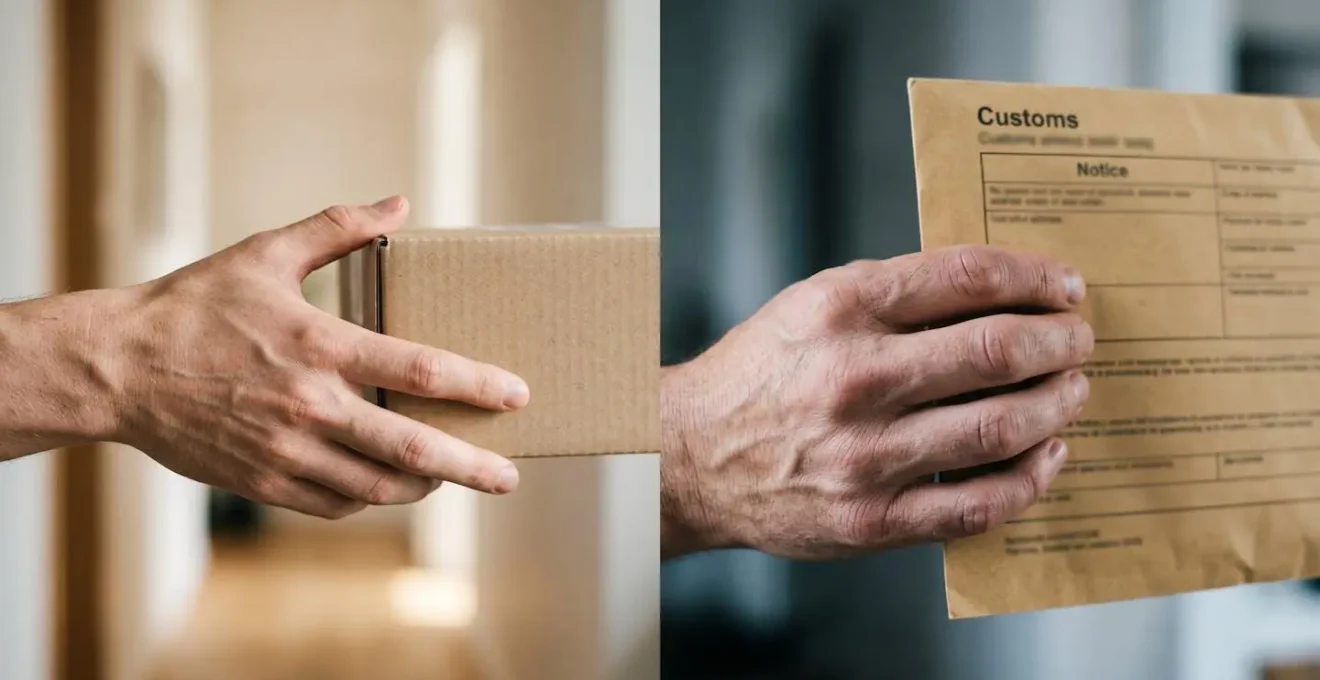
The solution is to ship DDP (Delivered Duty Paid). This means you calculate and collect all duties and taxes at checkout. The price the customer sees is the final, landed cost. While this increases the upfront price, it provides transparency and eliminates surprises. The customer simply receives their package as if it were a domestic order. This shift from a confusing, high-friction process to a seamless one is a powerful driver of international conversion and loyalty.
Case Study: How a Fashion Retailer Eliminated Refusals with DDP
An online fashion retailer shipping $200-500 orders from the US to the UK initially used DDU. Customers were hit with surprise customs charges of up to £85, leading to a 22% package refusal rate and a flood of negative reviews. After switching to a DDP model using a duty calculator at checkout, their displayed prices increased by 28%. However, cart abandonment only rose by 4%, while package refusals plummeted to under 2%. The net result was an 18% increase in completed international orders and a 12-point improvement in profit margin due to the elimination of return shipping costs.
When to Launch in a New Country Based on Local Holiday Calendars?
Successfully launching in a new market isn’t just about what you sell and how you ship it; it’s about when you sell it. A common mistake is to apply a one-size-fits-all marketing calendar, centered around events like Black Friday, to every country. This ignores the rich tapestry of local holidays, gifting seasons, and even bonus payment schedules that drive consumer spending.
For example, launching a new luxury product in Japan in early May, right after the Golden Week holiday, might be a misstep. However, launching in late June could be perfect. As Japan e-commerce market insights show, many companies pay out average summer bonuses of nearly $3,000, with that discretionary income focused on luxury goods and leisure. Similarly, in China, Single’s Day on November 11th dwarfs all other shopping events. In India, Diwali drives massive spending in October or November. These are not just holidays; they are powerful economic engines.
The strategic approach is to map out these key commercial dates for your target country and plan a « shoulder-season » launch. This means you establish your market presence—building email lists, running localized ads, seeding products with influencers—in the 6-8 weeks before a major shopping event. You then « go live » with full shipping capabilities about 2 weeks before the peak, capturing the built-up demand without getting caught in the most intense (and expensive) shipping crunch. It’s also wise to avoid launching during « commercial dead zones, » such as August in much of Europe when many people are on vacation, or the week after Lunar New Year in China.
Why Your « Made in Italy » Shirt Might Not Qualify for Tariff Exemptions?
One of the great promises of international trade is the ability to leverage Free Trade Agreements (FTAs) to reduce or eliminate import tariffs, giving you a significant cost advantage. However, claiming these benefits is not as simple as looking at the « Made In » label on your product. Customs agencies operate under strict Rules of Origin (RoO), which define a product’s « economic nationality. »
This is a concept that trips up many businesses. You might sell a shirt that was cut and sewn in Italy, but if the fabric was woven in China from Pakistani cotton, it may not qualify as an « Italian » product under the terms of a specific trade deal like the EU-Canada agreement (CETA). The rules require a « substantial transformation » to take place within the FTA partner country. For textiles, this could mean the yarn must be spun, the fabric woven, *and* the garment assembled there—not just the final step.
As trade compliance experts note in documentation best practices, this is about more than just assembly location:
It’s not just where the final product is assembled, but the ‘economic nationality’ of its components. A shirt sewn in Italy from Chinese fabric may not qualify as ‘Italian’ for the EU-Canada trade agreement (CETA).
– Trade compliance experts, International trade documentation best practices
To avoid penalties for incorrect claims, you must vet your suppliers rigorously. This means going beyond asking for a final Certificate of Origin (COO). You need to request a breakdown of their component sourcing and understand the specific RoO for your product’s category (HS Code) in your target market. For high-value shipments, working with a customs broker to pre-classify your goods is a wise investment to prevent audits and retroactive duties.
Credit Cards vs Digital Wallets: Which Payment Method Dominates Emerging Markets?
While optimizing for fees is critical everywhere, a fatal mistake when entering emerging markets is assuming that Visa, Mastercard, and PayPal are universal. In many of the world’s fastest-growing e-commerce regions, these traditional methods are not the primary way people pay. A significant portion of the population may be unbanked or simply prefer mobile-first solutions. Failing to offer the dominant local payment method is like having a locked door at your checkout.
The payment landscape is highly fragmented. In Southeast Asia, digital wallets like GCash and GrabPay are king. In China, operating without Alipay and WeChat Pay is virtually impossible. Brazil has seen explosive adoption of PIX, an instant bank transfer system, while much of Sub-Saharan Africa runs on mobile money like M-Pesa. Offering these options isn’t just a convenience; it’s a fundamental signal of trust and market understanding. Customers who don’t see their preferred payment method will simply abandon their cart, assuming your store is not for them.
This data, based on analysis from sources like U.S. government commercial guides, highlights the regional dominance of non-card payment types.
| Region/Market | Dominant Payment Type | Key Method | Adoption Rate | Strategic Note |
|---|---|---|---|---|
| Southeast Asia | Digital Wallet | GrabPay, GCash, TrueMoney | 65-75% | Mobile-first users; card penetration low |
| China | Digital Wallet | Alipay, WeChat Pay | 85%+ | Near-mandatory for consumer trust |
| Brazil | Installment / Digital | PIX, Mercado Pago | 70% (PIX) | Instant bank transfers; installment culture |
| Sub-Saharan Africa | Mobile Money | M-Pesa, MTN Mobile Money | 60-80% | Bypasses traditional banking infrastructure |
| India | UPI / Digital Wallet | UPI, Paytm, PhonePe | 70%+ | Government-backed digital payment push |
| Latin America (ex-Brazil) | Cash / Installment | OXXO, Mercado Pago installments | 50-60% | Cash-on-delivery still significant |
Case Study: 40% Conversion Lift from Adding a Regional Wallet
A mid-sized US electronics retailer expanded to the Philippines and Indonesia, initially offering only cards and PayPal. They saw a staggering 58% cart abandonment rate at checkout. After integrating local wallets GCash (Philippines) and GoPay (Indonesia) through a regional payment gateway, their checkout conversion rate improved by 43% in the Philippines and 38% in Indonesia within six weeks. The local payment options acted as powerful trust signals, dramatically reducing friction and lowering their customer acquisition cost.
Key takeaways
- International logistics is a system of interlocking parts; mastering the data for each part is the key to control.
- The customer experience doesn’t end at your checkout. It extends to the moment the package is in their hands, making DDP shipping essential.
- Don’t assume your home market’s best practices will work abroad. From payment methods to holiday calendars, localization is non-negotiable.
How to Get Your International Package Through Customs Without Delays?
We’ve circled the issue of customs throughout this guide, and for good reason. It is the single biggest point of failure in international shipping. The good news is that most delays are preventable. They are not caused by physical inspections or lost paperwork, but by something much simpler: bad data. In fact, logistics compliance experts state that inaccurate or incomplete digital data is the #1 cause of customs delays. When the electronic information sent to the carrier and customs authorities is vague, incorrect, or missing, the system grinds to a halt.
To solve this, you need to treat your product information as the foundation of your logistics operation. Every single product in your catalog needs to have a set of clean, accurate data points associated with it. This is not a per-shipment task; it’s a one-time setup in your product information system (PIM) or e-commerce platform. The most critical data points are the HS Code, Country of Origin, a detailed item description, and the accurate product value.
An HS Code is a 6-digit global standard that classifies a product for customs authorities. A vague description like « shirt » forces a customs agent to guess the classification, leading to delays and potential fines. A precise description— »Men’s 100% cotton crew-neck t-shirt »—combined with the correct HS code allows for automated clearance. By enabling Electronic Trade Documents (ETD) with your shipping provider, this data is transmitted seamlessly, eliminating the manual errors that cause the majority of hold-ups.
Action Plan: Audit Your Product Catalog for Customs Compliance
- Assign a 6-digit HS Code to every SKU in your catalog using a free lookup tool from the WCO or your shipping platform’s classifier.
- Record the Country of Origin for each product, tracking component sources if you plan to use trade agreements in multiple markets.
- Write a full, specific item description that includes material, use case, and intended user (e.g., ‘Women’s leather ankle boots for formal wear’).
- Store the accurate product value (your cost, not the retail price) in your system to ensure correct duty calculations and avoid audit triggers.
- Enable Electronic Trade Documents (ETD) in your shipping platform to automate the generation and transmission of commercial invoices.
By systematically building this data foundation, you transform customs from a source of anxiety into a predictable, automated part of your business. This is the final and most crucial piece of the puzzle, enabling you to ship globally with the confidence and efficiency of a much larger company.