
The core problem is not your competence, but the unconscious bias your clothing can trigger. This guide reframes your wardrobe as a strategic tool for non-verbal communication.
- Your clothing choices are active signals that can either build or erode perceptions of authority before you even speak.
- Moving beyond generic trends to a system-based approach (like Kibbe or color theory) creates a consistent and powerful personal brand.
Recommendation: Start by conducting a psychological audit of your current wardrobe to eliminate pieces that create cognitive dissonance and weaken your presence.
For many women in leadership, the conference room can feel like a stage where you are perpetually miscast. You have the expertise, the drive, and the vision, yet you fight the subtle, nagging feeling that your presence isn’t landing with the gravity it deserves. You’ve followed the standard advice: wear a blazer, stick to neutrals, invest in quality. But these platitudes often fall short, because they treat clothing as a costume rather than what it truly is: a powerful tool of non-verbal communication.
The frustration is real because the bias is real. In environments where the archetype of power has long been masculine, any deviation can be unconsciously registered as a lack of seriousness or authority. The key, however, is not to mimic masculine dress. It’s to understand the psychological signals your clothing sends and to consciously engineer them to your advantage. This isn’t about « fashion »; it’s about applied psychology. It’s about building a form of psychological armor that aligns your external appearance with your internal authority.
This guide moves beyond the « what » to explain the « why. » We will deconstruct the subtle power of color, explore systems to define your unique power silhouette, and address the internal barriers—like holding onto « skinny clothes »—that sabotage your confidence. We will transform your approach from reactive dressing to proactive, intentional signaling, ensuring that when you walk into a room, your authority is felt before you ever say a word.
This article provides a strategic framework for using your wardrobe to build authority. We’ll explore the psychology behind color and fit, learn systems to simplify your choices, and master the non-verbal cues that command a room.
Summary: A Strategic Guide to Your Power Wardrobe
- Why Wearing Navy Blue to an Interview Is Safer Than Black
- How to Let Go of « Skinny Clothes » That Damage Your Body Image
- Kibbe Types vs. Seasonal Analysis: Which System Actually Simplifies Shopping?
- The « Instagram Clone » Mistake That Dilutes Your Personal Brand
- Why « Culture Fit » Is Often Just Code for Hiring People Like You
- When to Dress Down: The Power Move of Casual Confidence
- Why Using White in Your Ad Campaign Could Kill Sales in East Asia
- How to Use Body Language to Own the Room Before You Speak
Why Wearing Navy Blue to an Interview Is Safer Than Black
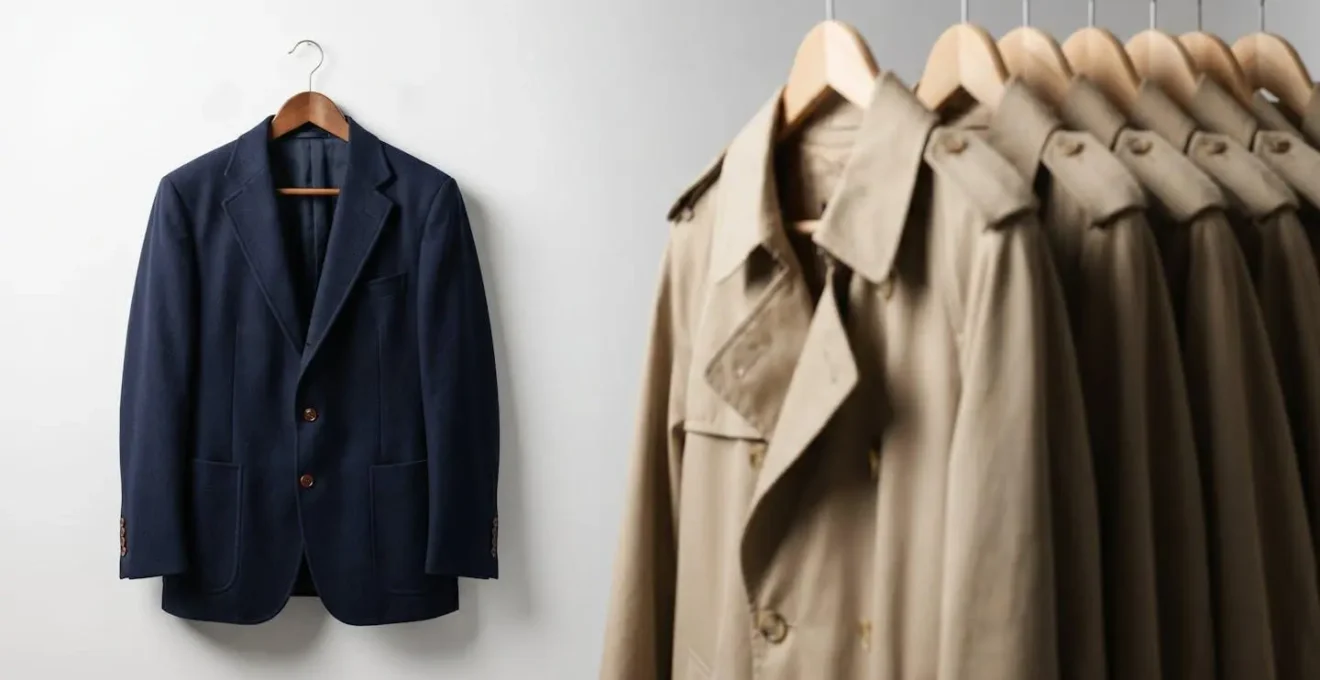
The default « power color » for many is black, but this is a strategic misstep. While black can communicate sophistication, it also carries the highest risk of being perceived as overly aggressive, intimidating, or even somber, depending on the context. Navy blue, however, occupies a unique psychological space. It projects authority and confidence while simultaneously building trust. In fact, deep navy and charcoal outfits scored as more trustworthy in behavioral experiments than their lighter counterparts. Navy suggests stability and reliability—foundational qualities for any leader.
Think of it as the difference between a fortress wall (black) and a well-built ship (navy). One is about impenetrable defense, the other about capable, forward momentum. In a high-stakes environment like an interview or a major presentation, your goal is to connect, not to intimidate. Navy establishes your credibility without creating a subconscious barrier between you and your audience. It’s a color that says « I am in command, and you can trust my leadership. »
This principle of intentional signaling through color is a cornerstone of a strategic wardrobe. The nuances are critical and culturally specific. For instance, while navy is a near-universal signal of trust in Western business contexts, other colors carry vastly different meanings globally. Understanding these codes is part of a leader’s toolkit for effective communication, preventing missteps that could undermine a message before it’s even delivered. The goal is to choose colors not based on fleeting trends, but on the precise psychological message you intend to send.
How to Let Go of « Skinny Clothes » That Damage Your Body Image
Your closet should be a source of power, not a museum of past selves that makes you feel inadequate in the present. Holding onto « skinny clothes »—garments from a time when your body was different—is a common but destructive form of self-sabotage. Every time you see them, they send a silent, damaging message: « You are not good enough as you are. » This creates a state of cognitive dissonance, where your desire to feel confident is actively undermined by the very tools meant to build that confidence. This isn’t just a feeling; research confirms that higher body dissatisfaction is directly related to using clothing as camouflage rather than for self-expression.
Letting go is not an act of giving up; it is an act of claiming power. It is a declaration that your authority and worth are based on your mind and capabilities *today*, not on the size of your waist a decade ago. Dressing the body you have now, in clothes that fit perfectly and make you feel magnificent, is the only way to project genuine confidence. When your clothes fit well, you stop thinking about them. You can focus your mental energy on the meeting, the negotiation, or the presentation, rather than on a waistband that digs or a seam that pulls.

This process of release is profoundly psychological. It’s about making space, both physically in your closet and mentally in your mind, for the leader you are right now. A wardrobe filled only with clothes that fit and empower you becomes your psychological armor. It’s an environment of 100% support, with no room for judgment. The goal is a closet where every single item is a viable option that makes you feel ready to command a room.
Your Action Plan for a Wardrobe Detox
- Isolate and Assess: Gather every piece of clothing that doesn’t currently fit or makes you feel bad. Place them in a separate space.
- Confront the Emotion: For each item, ask yourself: What emotion or memory am I holding onto? Is it serving the confident leader I am today?
- The « One Year » Rule: If you haven’t worn it in a year (and it’s not a formal gown), it’s not part of your current life. It’s time for it to go.
- Re-home with Intention: Donate, sell, or consign the items. Frame this not as a loss, but as giving the clothes a new purpose while you embrace your own.
- Replenish Strategically: Identify the gaps left in your wardrobe. Create a targeted shopping list for high-quality, perfectly fitting replacements that align with your power-dressing strategy.
Kibbe Types vs. Seasonal Analysis: Which System Actually Simplifies Shopping?
Once you’ve cleared out the old, the question becomes: how do you build the new without falling into the same traps? The advice to « find your personal style » is frustratingly vague. This is where style systems like the Kibbe Body Types and Seasonal Color Analysis become invaluable strategic tools. They replace guesswork with a logical framework, simplifying decisions and ensuring your choices are consistently powerful and harmonious. They help you define your unique style archetype.
Seasonal Color Analysis is the more straightforward of the two. It categorizes your personal coloring (skin, hair, eyes) into a « season » (e.g., « Deep Winter, » « Soft Autumn ») and provides a palette of colors that will naturally harmonize with you. Wearing colors from your palette makes you look healthier, more vibrant, and more awake. It’s a simple way to ensure you always look your best without complex makeup or styling.
The Kibbe Body Type system is more nuanced. It analyzes the interplay of bone structure, body flesh, and facial features to place you in one of 13 Image IDs, from « Dramatic » to « Romantic. » Each ID has recommendations for silhouettes, fabrics, and even a general « essence » that will best express your unique physical makeup. It’s not about fitting into a box; it’s about understanding your lines so you can choose clothes that work *with* your body, not against it. As David Kibbe himself now emphasizes, the modern approach is more intuitive, encouraging you to « feel your way to the colors that make your heart sing. »
Case Study: The Power of a System-Based Approach
A blogger who struggled with her professional image documented her journey after discovering she was a « Soft Classic » in the Kibbe system and a « True Summer » in color analysis. Before, she often felt her clothes looked « off » despite following trends. After applying the systems, she focused on soft, symmetrical silhouettes and a cool, muted color palette. The result, as she notes in her analysis of her style transformation, was a newfound confidence. She finally understood *why* certain clothes worked, allowing her to build a wardrobe where every piece felt authentic and empowering, simplifying shopping and eliminating costly mistakes.
Ultimately, the best system is the one that resonates with you. The goal isn’t rigid adherence but strategic guidance. These systems are not rules; they are roadmaps. They provide the « why » behind what looks good on you, transforming shopping from a chaotic, trend-driven chore into a precise, strategic act of building your personal brand.
The « Instagram Clone » Mistake That Dilutes Your Personal Brand
In the quest to project authority, one of the most common traps is mimicry. You see a powerful woman on Instagram or a colleague who commands attention, and you attempt to replicate her style. The result is often the opposite of what you intended. Instead of projecting authentic power, you look like a clone, and your personal brand becomes diluted. This happens because you are adopting the « what » (the blazer, the shoes) without understanding the « why » that makes it work for *that specific person*. True authority comes from authenticity, not imitation.
This pressure to conform to a narrow, media-driven ideal is immense; a staggering 76% of US adults say that the media promotes an unattainable body image for women. Following these fleeting, one-size-fits-all trends is a strategic error. A wardrobe built on fast-fashion trends signals disposability and a lack of conviction. In contrast, a wardrobe built on timeless silhouettes, quality fabrics, and a consistent color palette—your unique style archetype—signals stability, deliberation, and a strong sense of self.
Your goal should be to become instantly recognizable for your unique brand of leadership, and your wardrobe is a key part of that. Think of iconic female leaders: their style is consistent and uniquely their own. It doesn’t follow trends; it sets a personal standard. By using the systems discussed previously, you can develop your own uniform—a curated collection of silhouettes and colors that you are known for. This creates a powerful visual signature that reinforces your brand every single day. It eliminates decision fatigue and ensures you are always sending a clear, consistent message of who you are.
Why « Culture Fit » Is Often Just Code for Hiring People Like You
The term « culture fit » is one of the most nebulous and potentially discriminatory concepts in the corporate world. In male-dominated industries, the unspoken « culture » is often simply the homosocial comfort of the existing majority. When a woman’s appearance deviates from the established norm—even in subtle ways—it can be unconsciously flagged as « not a good fit. » Your wardrobe, therefore, becomes a battleground of perception where you must strategically navigate an unwritten dress code.
This is not about surrendering your identity. It’s about understanding the code so you can rewrite it. If the « fit » is a sea of grey and navy suits, showing up in a bright floral dress might, unfortunately, distract from your message, no matter how brilliant your ideas are. However, this doesn’t mean you must wear a carbon copy of a man’s suit. The strategy is to adopt the *signals* of the dominant culture (e.g., structure, quality fabric, sober colors) but interpret them through your own authentic style.
For example, you can meet the expectation of a « suit » with a sharply tailored, high-quality wool crepe dress and a matching jacket. Or you can opt for a structured blazer paired with elegant, wide-leg trousers in a powerful navy. You are speaking the language of « authority » and « professionalism » that the culture understands, but with your own accent. This is how you signal that you are both a part of the team and a leader who brings a unique perspective. You are demonstrating that « fit » does not have to mean « sameness. » You are expanding the definition of what a leader looks like.
When to Dress Down: The Power Move of Casual Confidence
Once you have firmly established your authority and your « power uniform » is recognized, a new strategic tool becomes available: the intentional choice to dress down. This is not about being sloppy or casual in a lazy way. This is a deliberate power move that signals a different kind of confidence. When you are the most senior person in the room and you choose to wear elegant knitwear and tailored trousers while others are in formal suits, you are sending a powerful message: « My authority is so secure, it does not depend on the armor of a suit. »
This move, which can be termed strategic de-escalation, is most effective in specific contexts. For example, in a creative brainstorming session, a more relaxed attire can signal openness and make you seem more approachable, encouraging your team to share bolder ideas. In a one-on-one mentoring session with a junior colleague, dressing down can close the power gap and foster a more honest and productive conversation. It shows that you have the emotional intelligence to adapt your level of formality to the situation.
The key to making this work is that the « casual » pieces must still be of impeccable quality and fit. A luxurious cashmere sweater, perfectly tailored dark-wash jeans (in a creative environment), and high-quality leather loafers are not « sloppy. » They are simply a different dialect of the power-dressing language. This move can backfire if your authority isn’t already well-established or if the casual items are low-quality. But when executed correctly, it demonstrates a level of confidence that is far more potent than any suit. It shows you own the room, no matter what you’re wearing.
Why Using White in Your Ad Campaign Could Kill Sales in East Asia
While this article focuses on personal, professional attire, the principle of color psychology extends globally and has high-stakes implications that reinforce our core theme: color is never neutral. The example of the color white is a powerful lesson in cultural context. In Western cultures, white is associated with purity, weddings, and minimalism. It’s often seen as clean, fresh, and modern. However, in many East Asian cultures, white is traditionally the color of mourning and funerals. Launching a product with white-centric branding in these markets could be a catastrophic, multimillion-dollar mistake.
This serves as a critical reminder that all communication—especially non-verbal communication through color and dress—is filtered through a cultural lens. The « power » of a color is not inherent; it is assigned by a society. What signals authority in a boardroom in New York might signal something entirely different in Tokyo or Dubai. As a leader, particularly in a global context, developing this cultural sensitivity is not optional; it is essential.
Applying this back to your wardrobe, it means being mindful when traveling for business or meeting with international partners. While navy blue is one of the safest cross-cultural colors for business, other choices require more thought. It pays to do a small amount of research on local customs and color symbolism. This isn’t about drastically changing your style for every trip. It’s about making small, respectful adjustments that show you are a globally-minded and culturally-aware leader. This small effort in intentional signaling can prevent major misunderstandings and build rapport far more effectively than words alone.
Key Takeaways
- Your wardrobe is a communication tool; use it to consciously signal authority and competence before you speak.
- Move beyond generic fashion advice by using systems like Kibbe and Seasonal Color Analysis to build a consistent, powerful, and authentic personal brand.
- Letting go of clothes that don’t fit your current body is a crucial act of power that eliminates cognitive dissonance and builds genuine confidence.
How to Use Body Language to Own the Room Before You Speak
Your meticulously chosen wardrobe is your psychological armor, but it is your body language that wields it. You can be wearing the most powerful, perfectly tailored suit, but if you enter a room with slumped shoulders and avoiding eye contact, your message is one of submission, not command. The impact of non-verbal cues is staggering; up to 90% of first impressions can be formed by appearance and color alone, with body language being a primary driver of that perception. Mastering your physical presence is the final, crucial layer of projecting authority.
Owning a room starts with taking up space. Power is expansive. Stand with your feet shoulder-width apart—a solid, grounded stance. Keep your shoulders back and your chin level. When you sit at a conference table, don’t shrink into your chair. Place your notebook or tablet in front of you and rest your arms on the table or the chair’s armrests. These subtle acts claim your territory and signal that you belong there.

Your gestures should be deliberate and controlled. Avoid fidgeting, as it signals nervousness. When you speak, use open-palm gestures, which are subconsciously read as honest and non-threatening. When listening, lean in slightly and maintain steady eye contact to show you are engaged and confident. When you walk, walk with purpose. Your movement should have a destination, even if it’s just from the door to your seat. These are not theatrical performances; they are practiced, intentional habits that align your physical presence with your professional status. When your powerful wardrobe is paired with commanding body language, your authority becomes undeniable.
By reframing your wardrobe as a strategic asset and aligning it with powerful body language, you are no longer just getting dressed. You are preparing for battle in the corporate arena, armed with the confidence that your presence is a true reflection of your capabilities. Start today by applying these principles to build an image that doesn’t just ask for respect, but commands it.