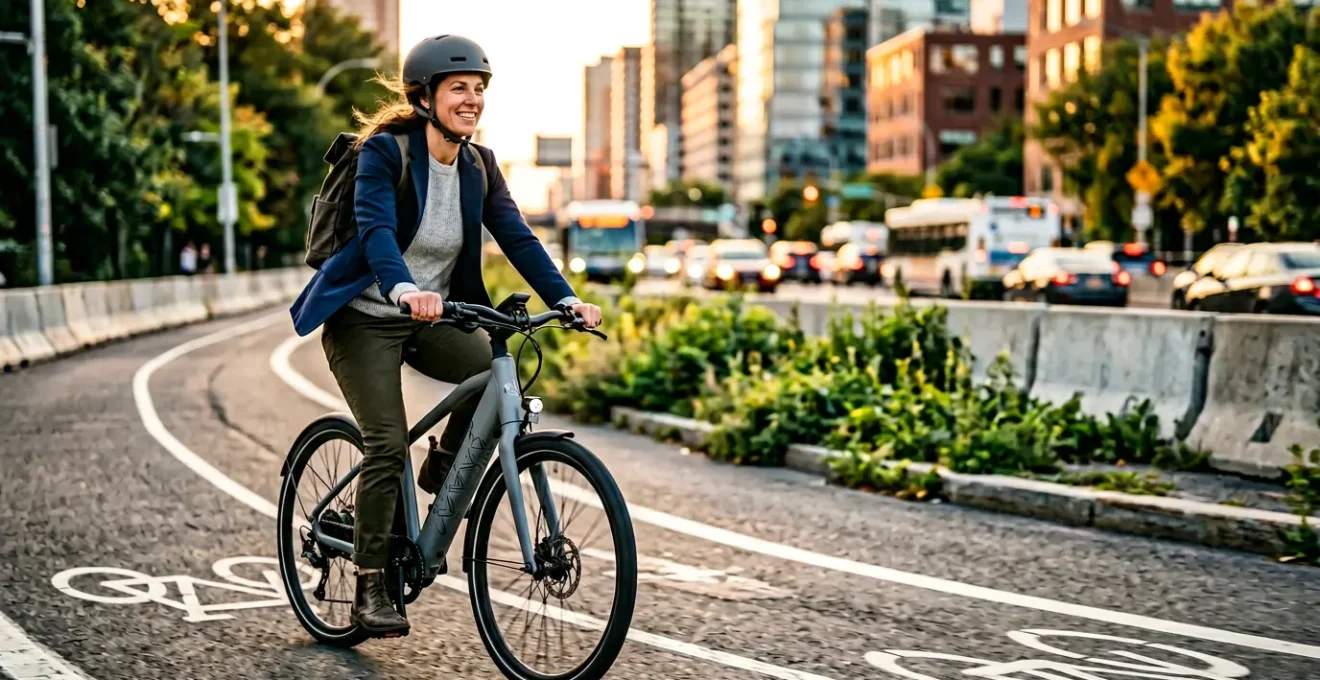
In summary:
- Ditch the « gym guilt » by turning your necessary commute into effective, low-impact cardio that burns significant calories.
- Build a reliable « commute architecture » by choosing the right bike-share system and mastering timing to eliminate daily friction.
- Use the principle of « habit stacking » to make your new fitness routine automatic, ensuring long-term consistency without relying on motivation.
The gym membership card sits in your wallet, a small rectangle of guilt. You know you *should* go, but finding the time and energy after a long day at the office feels like a monumental task. For many sedentary office workers, the biggest barrier to fitness isn’t a lack of desire, but a surplus of friction. The planning, the packing, the travel to and from the gym—it all adds up, making the couch an easy winner.
The common advice is to find an activity you love, but that still requires carving out dedicated time. What if the solution wasn’t about adding another task to your day, but about transforming one you already have to do? This is where the shared e-bike commute comes in, but not in the way you might think. The goal isn’t just to pedal to work. The true, sustainable change comes from architecting a frictionless fitness system where exercise becomes an automatic and enjoyable byproduct of your daily journey.
This guide moves beyond simply telling you to ride a bike. We’ll deconstruct the common barriers—from reliability and hygiene to safety and cost—and give you a practical framework to build a commute that doubles as your most consistent workout ever. It’s time to stop relying on willpower and start designing a system that works for you.
In the following sections, we will explore the practical steps and strategic mindset needed to successfully trade your gym routine for a daily e-bike adventure. You’ll learn how to maximize the fitness benefits, ensure a bike is always ready when you are, and build a new habit that sticks.
Table of Contents: How to Ditch Your Car for a Month Without Doubling Your Commute Time?
- Why E-Biking Still Burns 300 Calories an Hour Despite the Motor?
- How to Sanitize Shared Bike Grips in 10 Seconds Before Riding?
- Docked Stations vs Free-Floating Bikes: Which is More Reliable for Appointments?
- The Insurance Clause You Missed That Could Cost You $500 in Damages
- When to Find Available Bikes at Major Stations During Peak Hours?
- The « Door Zone » Mistake That Injures Urban Cyclists Every Day
- Why Anchoring Flossing to Brushing Is More Effective Than Motivation?
- How to Ditch Your Car for a Month Without Doubling Your Commute Time?
Why E-Biking Still Burns 300 Calories an Hour Despite the Motor?
The first mental hurdle to clear is the persistent myth that using an e-bike is « cheating. » If you’re looking to replace your gym cardio, you need to know the effort is worthwhile. The reality is that the electric motor is an assistant, not a replacement for your effort. It helps you get up to speed and conquer hills, but you are still the primary engine. This assistance is what makes the workout accessible and sustainable, especially for those new to cycling or facing long commutes.
The caloric burn is significant and shouldn’t be underestimated. In fact, research shows that e-bike riders can burn between 300 and 600 calories per hour, depending on the level of pedal assist you choose and the intensity of your effort. Choosing a lower assistance level forces your body to work harder, turning your commute into a legitimate moderate-intensity workout. The key is that you remain in control of the effort.
This sentiment is echoed by fitness professionals who see e-bikes as a powerful tool for increasing overall activity. As cycling coach Tom Bell explains in research on the topic:
You can still push as hard as you like on an ebike, you just have added assistance.
– Tom Bell, BikeRadar e-bike fitness research
This means you can tailor the workout to your daily energy levels. Feeling strong? Use a low-assist mode for a challenging ride. Need an easier day? Increase the assistance and enjoy a recovery spin without skipping your commute. This flexibility is the foundation of a sustainable fitness habit, something a rigid gym schedule often lacks.
How to Sanitize Shared Bike Grips in 10 Seconds Before Riding?
One of the most immediate points of friction with shared micromobility is hygiene. The thought of gripping handlebars used by countless others can be a significant deterrent. However, overcoming this small obstacle is simple with a little preparation. Building a frictionless system means having a quick, repeatable solution for these minor annoyances so they don’t derail your commitment.
The most common and effective methods take mere seconds. Keeping a small bottle of hand sanitizer or a pack of antibacterial wipes in your bag allows you to quickly clean the grips and saddle before you ride. A quick wipe-down is all it takes to provide peace of mind and remove this mental barrier. It’s a tiny investment in time for a much more comfortable experience.
For those looking for a zero-waste, no-mess solution, a dedicated pair of cycling gloves is the ultimate answer. They provide a consistent physical barrier between your hands and the bike.
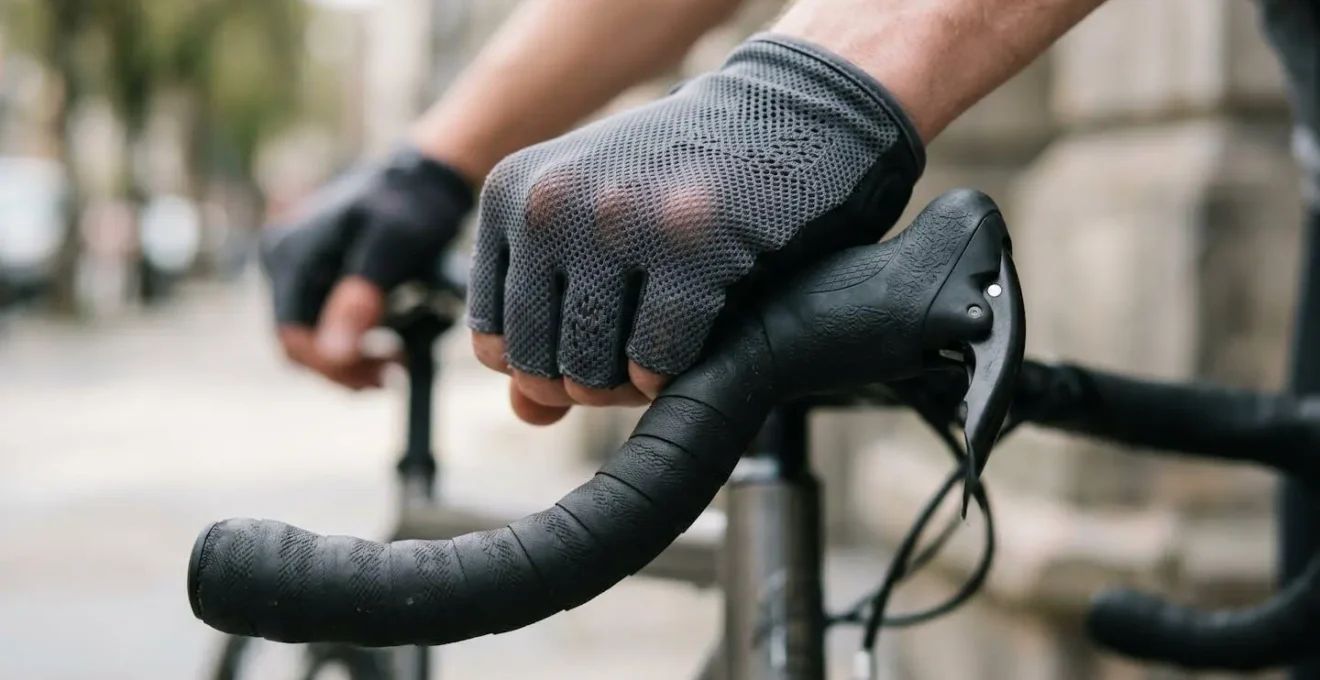
As shown here, lightweight, breathable gloves not only solve the hygiene issue but also improve grip and comfort, reducing vibrations from the road. They become part of your « commute uniform, » just like your helmet or work bag. Tucking them into your jacket pocket makes the process automatic: arrive at the station, put on gloves, and ride. This turns a point of hesitation into a simple, thoughtless step in your routine, keeping your fitness momentum intact.
Docked Stations vs Free-Floating Bikes: Which is More Reliable for Appointments?
Your new fitness system is only as good as its reliability. If you can’t depend on finding a bike when you need one—or a place to park it at your destination—you’ll quickly revert to your old habits. Understanding the fundamental differences between docked and free-floating bike-share systems is crucial for engineering a dependable commute, especially when you have time-sensitive appointments.
Docked systems, like New York’s Citi Bike, feature bikes that must be picked up from and returned to physical stations. Free-floating (or dockless) systems allow you to find and leave a bike anywhere within a designated service area, located via a GPS-enabled app. For a daily commuter, this distinction is everything. Docked systems offer predictable locations; you always know where the stations are. Dockless systems offer flexibility but introduce the variable of a « GPS hunt » to find a nearby bike.
The data on usage patterns reveals a clear preference for commuters. As a comparative analysis shows, the structured nature of docked systems makes them a better fit for regular, time-sensitive trips. This is because their availability is concentrated at predictable, high-traffic hubs.
| Feature | Docked System | Dockless System |
|---|---|---|
| Availability Certainty | High at stations (predictable locations) | Variable (GPS-dependent search) |
| End-Trip Reliability | Risk of full docks at destination | Park anywhere in service zone |
| Peak Hour Performance | Higher ridership during commute times | Lower predictability during rush |
| Rebalancing Method | Scheduled service vehicle routes | User distribution-dependent |
| Best For | Time-sensitive appointments, regular commutes | Flexible journeys, one-way trips |
| Station Density (NYC example) | 28 stations per square mile | N/A (continuous coverage) |
While a dockless bike might be closer, a docked station provides higher certainty. For the office worker who needs to be at their desk by 9:00 AM, knowing exactly where to find a bike is paramount. This is why, according to NACTO data, station-based systems are more heavily used during weekdays than their dockless counterparts. They are the workhorses of urban commute architecture.
The Insurance Clause You Missed That Could Cost You $500 in Damages
Integrating an e-bike commute into your life is liberating, but it’s not without risk. A significant, often overlooked, point of friction is liability. Who pays if the bike is damaged, or worse, if you’re involved in an accident? The fine print in most user agreements places the responsibility squarely on the rider for any damage that occurs during their rental period. This can lead to unexpected fees ranging from minor scratches to the full replacement cost of the bike, which can be over $500.
To protect yourself, you must shift your mindset from a casual user to a responsible operator. This means creating a simple, non-negotiable pre-ride protocol. Documenting the bike’s condition *before* you unlock it is your single best defense against unjust damage fees. This simple habit can save you hundreds of dollars and immense stress, ensuring a minor issue doesn’t derail your entire fitness system. As legal experts point out, liability often falls on the user unless a specific equipment failure can be proven.
The bike share company is only liable if a defect in the bicycle contributed to the accident; otherwise, the money for your accident related medical bills could come from the at-fault driver’s insurance.
– BDIW Law, Bike Share Accident Liability Analysis
Adopting a pre-ride check is a core component of your new commute architecture. It’s a moment of mindfulness that ensures you start every ride with confidence. Follow this checklist to make the process quick and automatic.
Your Pre-Ride Liability Checklist: 5 Steps to Financial Peace of Mind
- Document Pre-Existing Damage: Before unlocking, take a quick, time-stamped photo of the bike from both sides, focusing on any visible scratches, dents, or broken parts.
- Report Damage Immediately: Use the bike-share app to report any significant damage you find *before* starting your ride. This logs the issue and absolves you of liability.
- Confirm a Proper Lock-Up (Docked): When ending your ride at a station, listen for the audible « click » and wait for the green light to confirm the bike is securely docked and your rental has ended.
- Verify End-of-Ride (Dockless): If using a dockless system, ensure you park in a designated zone, use any required physical lock, and check the app to confirm the ride has officially ended before walking away.
- Review Personal Insurance: Check your personal renter’s or homeowner’s insurance policy for « personal liability » coverage, as it may extend to incidents involving rental bikes.
When to Find Available Bikes at Major Stations During Peak Hours?
You’ve chosen a docked system for its reliability, but that doesn’t eliminate the classic commuter’s nightmare: arriving at the station to find an empty dock. During peak hours, bike-share systems experience « tidal flows, » where bikes move en masse from residential areas to business districts in the morning and back again in the evening. Mastering your timing is the key to ensuring a bike is always waiting for you.
The secret isn’t leaving earlier; it’s leaving smarter. The absolute peak of the rush hour creates the most scarcity. Shifting your departure by just 15-20 minutes can make a world of difference. This « shoulder time » allows you to avoid the main rush and often coincides with the arrival of rebalancing vans that restock popular stations. According to data from NACTO, these peak ridership patterns are highly predictable, which means you can strategize around them.
Developing a proactive strategy for bike availability turns a game of chance into a predictable system. Here are some techniques used by veteran bike commuters:
- The Golden 20 Strategy: Aim to start your commute 20 minutes before or after the absolute peak (e.g., ride at 8:10 AM or 8:50 AM instead of 8:30 AM).
- Understand Tidal Flow: Know the direction of the commute. In the morning, bikes flow *out* of residential areas and *into* business districts. In the evening, this pattern reverses.
- Watch for Rebalancing: Keep an eye on the app. If a nearby station suddenly jumps from 2 available bikes to 15+, it means a service van has just restocked it.
- The 5-Minute Walk Rule: Don’t rely on a single station. Identify a primary and at least two backup stations within a five-minute walking radius of your start and end points.
Using your bike-share app strategically is part of this process. Don’t just check it as you walk out the door. Check it five minutes before you plan to leave to get a real-time picture of availability at your primary and backup stations.
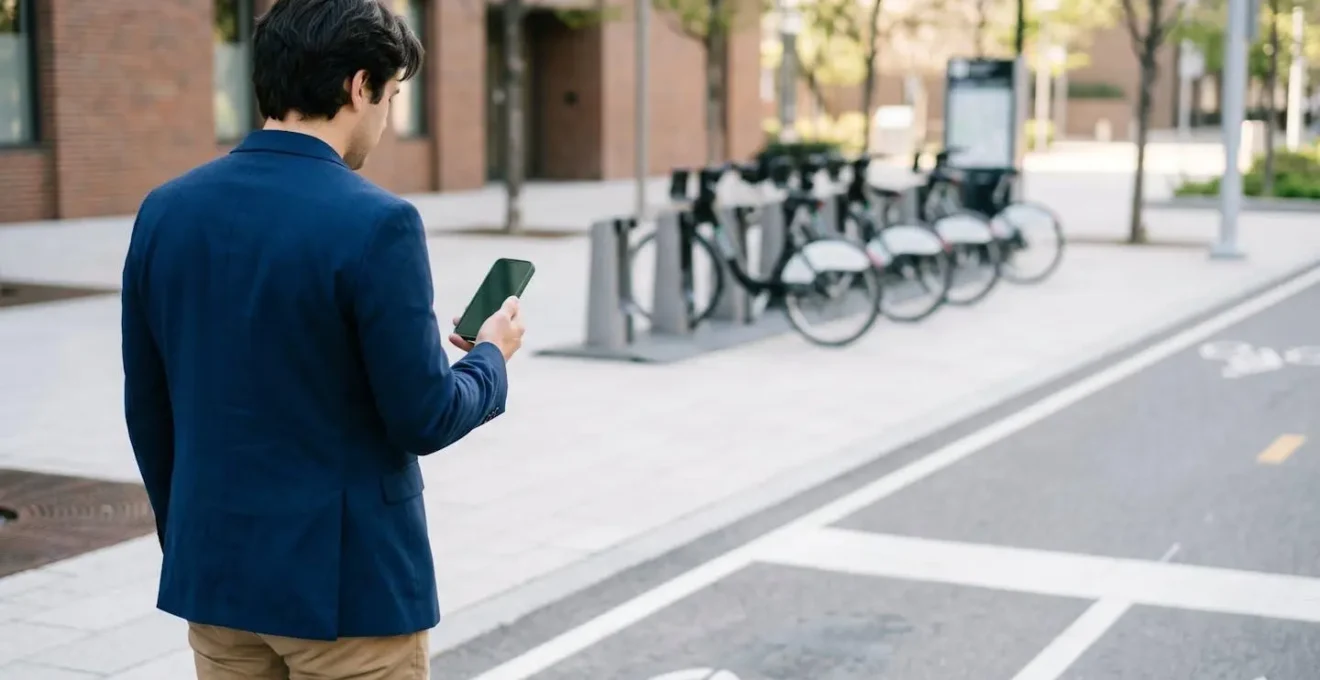
This proactive monitoring transforms the app from a simple tool into your personal logistics dashboard. It’s a core practice in building a resilient commute system, ensuring that your incidental cardio is never derailed by an empty dock.
The « Door Zone » Mistake That Injures Urban Cyclists Every Day
Your e-bike commute system can’t be sustainable if it doesn’t feel safe. Of all the hazards in an urban environment, one of the most common and dangerous is the « door zone »—the area next to parked cars where a suddenly opened door can cause a serious accident. Avoiding this threat isn’t about luck; it’s about assertive road positioning and developing a constant state of awareness.
Many new cyclists ride too close to parked cars out of a desire to stay out of the way of traffic. This is a critical mistake. You have a right to the road, and claiming your space is the safest way to operate. This often means « taking the lane » by riding in the center, which makes you more visible and places you outside the range of an opening car door. It communicates to drivers that they must treat you as a vehicle and wait to pass you safely.
Beyond just positioning, active scanning is a non-negotiable habit for urban cyclists. You should constantly be looking for signs of life in parked cars. Here are some advanced techniques to make you a safer, more confident rider:
- The 5-Foot Rule: Always maintain a minimum distance of one full car door’s length (about 5 feet or 1.5 meters) from any parked vehicle. If the lane is too narrow, take the full lane.
- Scan for Occupants: Actively look through the windows of parked cars as you approach. Scan for drivers in the front seat, shadows of movement, or the glow of a phone screen.
- Watch for Telltale Signs: Be alert for brake lights turning off, exhaust smoke, or interior lights, which all signal that a driver may be about to exit the vehicle.
- Assertive Lane Positioning: Your position on the road is your primary form of communication. Riding assertively in the lane tells drivers « do not share this space, » preventing them from trying to squeeze past you too closely.
Understanding the risks is also about being prepared for the unexpected. As cycling insurance specialists often note, sharing the road increases the chances of an incident.
If you share the road with cars or pedestrians, or ride with a group, the likelihood of causing property damage or bodily injury to another party goes up significantly. Liability coverage should be considered.
– Velosurance Bicycle Insurance, Coverage FAQ for Bicycle Commuters
Why Anchoring Flossing to Brushing Is More Effective Than Motivation?
Here is the single most important secret to making your e-bike commute a permanent fitness habit: stop relying on motivation. Motivation is fickle; it comes and goes with your mood, the weather, and your energy levels. A system, on the other hand, is durable. The most effective way to build that system is through a psychological principle called « habit stacking. »
The concept, popularized by author James Clear, is simple: anchor a new habit you want to build (riding your e-bike) to an existing, automatic habit (like leaving for work). The formula is « After [Current Habit], I will [New Habit]. » So, « After I lock my front door to leave for work, I will walk to the bike-share station. » This creates a neurological link that makes the new behavior feel automatic over time, removing the need for a daily internal debate.
This is why e-biking is so powerful for building consistency. The e-assist lowers the barrier to entry, making the habit easier to start and stick with. In fact, multiple studies have found that e-bike riders typically ride for longer periods and more consistently than those on conventional bikes. They are building a more robust habit. You can apply this principle with a clear protocol:
- Anchor the Commute: Explicitly tie your ride to an existing trigger. « When my 7:30 AM calendar reminder goes off, I will put on my shoes and walk to the bike station. »
- Use Temptation Bundling: Pair something you *want* to do with the ride you *should* do. For example: « I will only listen to my favorite podcast while I am on my e-bike commute. »
- Stack Post-Commute Rewards: Create a rewarding ritual right after your ride. « After I dock my bike, I will buy my favorite coffee » or « After I arrive, I will take five minutes to stretch before starting work. »
- Track Consistency, Not Intensity: For the first month, your only goal is to ride every day you commute. Don’t worry about speed or calorie burn. Focus solely on performing the habit to build automaticity.
By focusing on designing the system rather than mustering willpower, you are building a frictionless fitness routine that becomes an integrated part of your life, not a chore you have to force yourself to do.
Key takeaways
- E-biking is an effective workout, not « cheating. » The motor assists, but you provide the power, burning significant calories while making exercise accessible.
- A successful bike commute depends on reliability. Choose a docked system for predictability and master peak-hour timing to ensure a bike is always available.
- The secret to long-term success is habit stacking. Anchor your new e-bike commute to an existing daily routine to make it automatic and eliminate the need for motivation.
How to Ditch Your Car for a Month Without Doubling Your Commute Time?
The final piece of the puzzle is redefining your concept of « commute time. » A 30-minute drive seems faster than a 45-minute e-bike ride on paper. But this calculation is flawed. You must factor in the time you would have spent going to the gym. When you combine your workout with your commute, the total time commitment to both activities often decreases significantly. That 45-minute ride replaces a 30-minute drive *and* a 60-minute gym session. You just saved 45 minutes.
This is the core of your new commute architecture: efficiency. You are reclaiming dead time and transforming it into productive, health-boosting activity. As one expert from SimpliFaster notes, the value is in its real-world application.
Unlike a stationary elliptical trainer, you can actually take your e-bike out for a spin or even commute to work.
– SimpliFaster, E-Bikes and Cardio: Staying Fit Guide
To fully optimize this system, you need to think like a logistics expert. It’s not just about the bike; it’s about how the bike integrates with your entire journey. Here are some final strategies to make your car-free commute as time-competitive as possible:
- Redefine « Commute Time »: Always calculate your e-bike ride against your drive *plus* your gym time to see the true time savings.
- Embrace Multimodal Commuting: Your e-bike doesn’t have to cover the entire distance. Use it to connect to a faster express train or bus line, bypassing slower local routes and traffic.
- Route-Hack with Tech: Use the « Bicycling » layer on Google Maps or apps like Komoot to discover protected bike lanes, greenways, and car-free shortcuts you’d never find in a car.
- Minimize Transition Time: Shave minutes off your journey by having your gear (helmet, gloves, bag) staged and ready to go. Perfect your docking/parking strategy so you can transition from rider to pedestrian in seconds.
By combining these strategies, you’re not just replacing a car commute; you’re designing a smarter, healthier, and often more enjoyable way to move through your day. You’ve built a system that delivers fitness without demanding extra time.
You now have the complete blueprint. The next step is to stop thinking and start doing. Begin today by using a cycling map to plan your first route, identify your primary and backup stations, and commit to making your next commute an active one.